


Mastering Survey Design: Principles and Techniques


Survey Design is a systematic process of creating surveys based on investigative purposes. In this article, we will provide you with a clear understanding of how to craft an effective survey.
Interested in designing a good survey? Why not refer to the SurveyCake’s Survey Design Quick Guide?
Steps before designing a survey questions
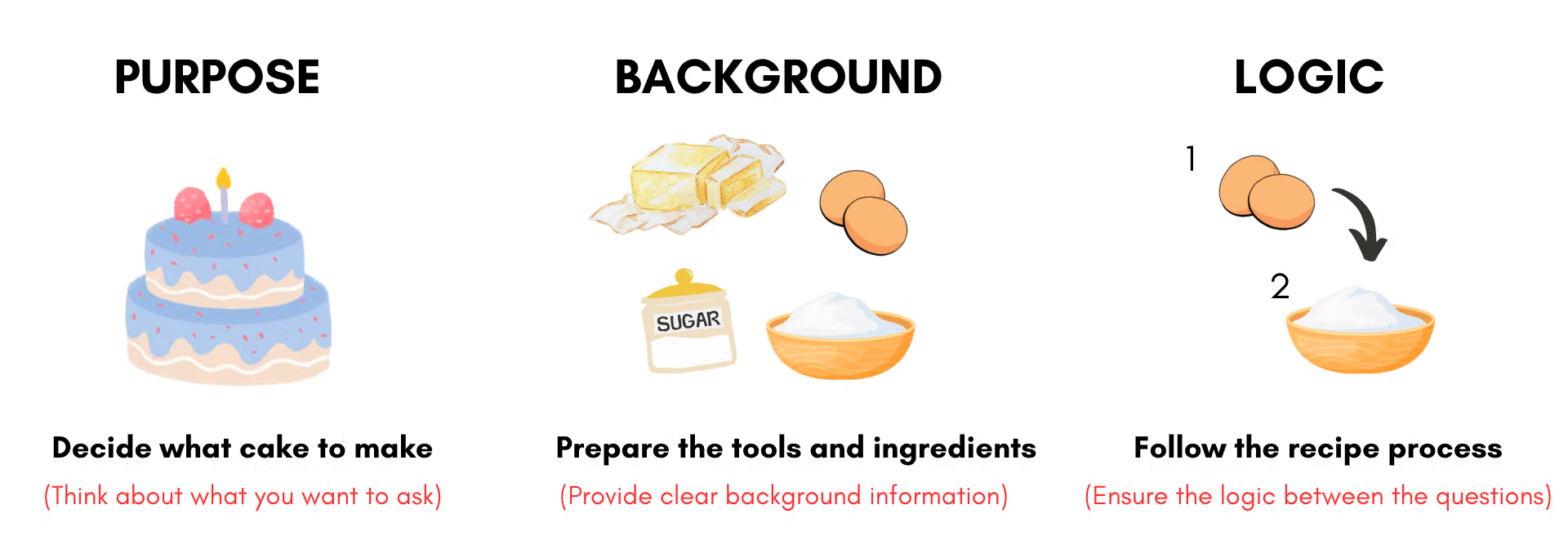
Before designing questions based on a framework, you must clearly understand the “purpose” of your questions. Asking a question unrelated to the survey not only confuses respondents but may also lead them to abandon the survey altogether.
The “background summary” of the questions is also crucial. You cannot expect respondents to answer based on imagined scenarios without providing adequate context.
Lastly, the sequence of your questions needs to be “logical”. If question A logically precedes question B, reversing them would be illogical.
Establish a hypothesis

Remember to have hypotheses for verification! The purpose of the survey is to verify hypotheses through investigation, so conclusions can be drawn. Before designing questions, remember to first propose “temporary hypotheses” for the questions, and then verify whether the hypotheses are valid through the survey.
Types of questions
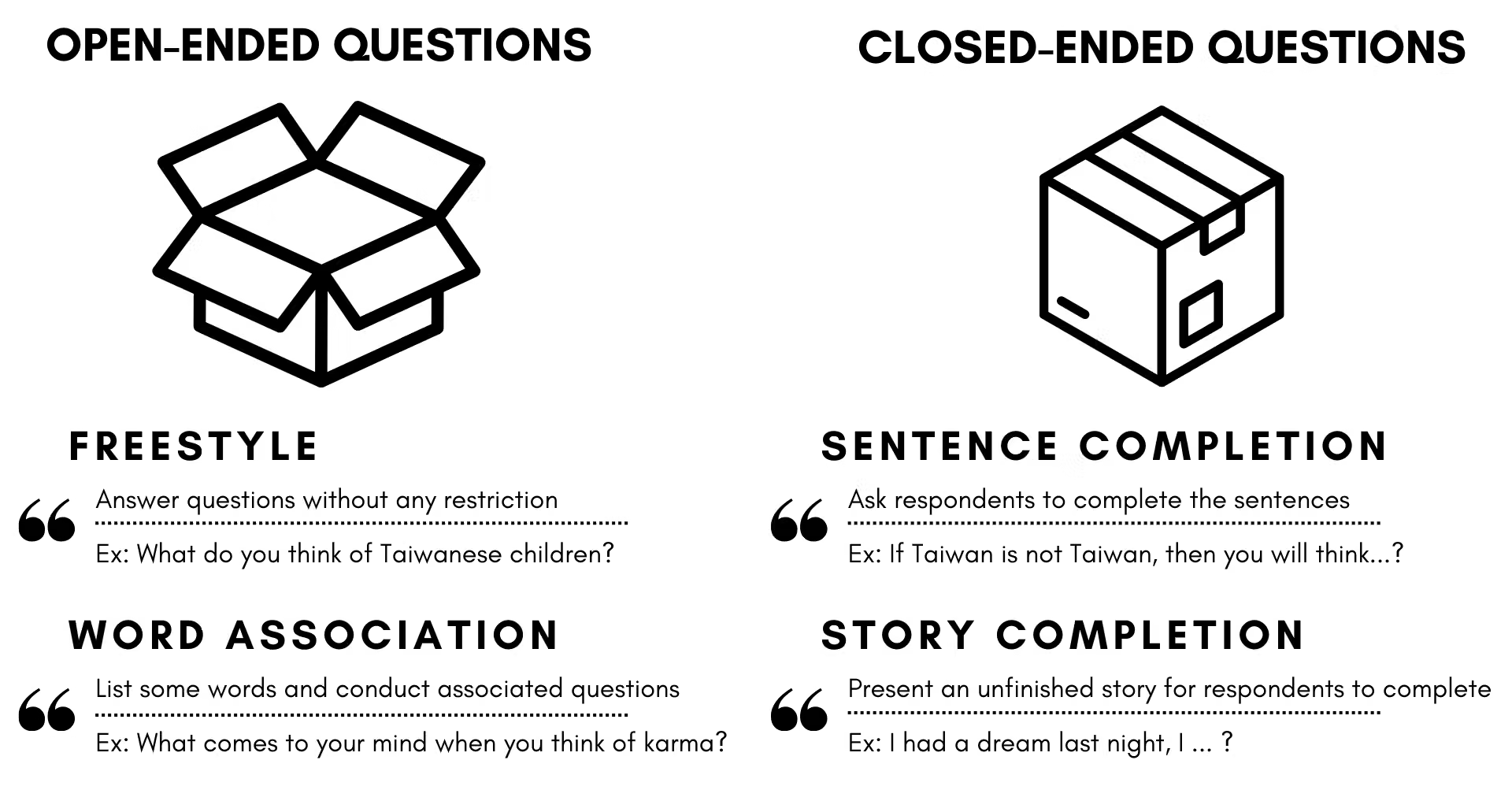
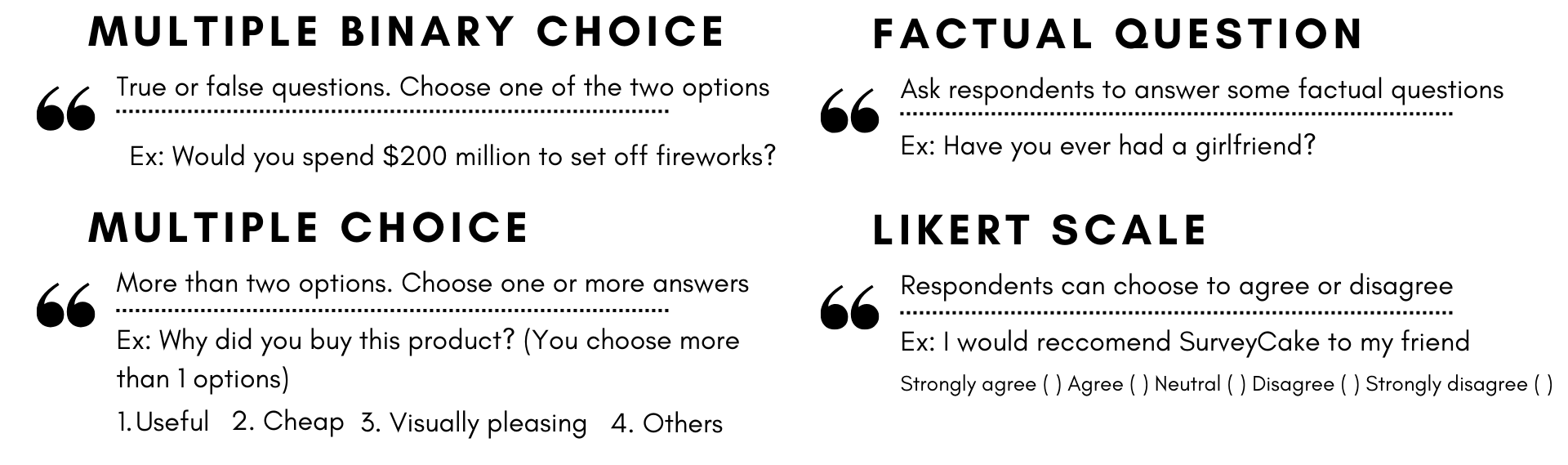
In general, questions can be categorized into two types, which are “open-ended” and “closed-ended.”
Open-ended questions allow respondents to answer in their own words without restrictions, sometimes yielding unexpected answers. However, open-ended questions should only comprise a small portion of a survey because having too many of them can make it difficult to quantify and analyze.
On the other hand, closed-ended questions provide predefined options for respondents to choose from. Due to standardized answers, they are not only easy to answer but also convenient for statistical analysis.However, the drawback is that respondents are limited to answering within the provided options, which may limit the reflection of other thoughts.
What can be asked specifically?
Now, what specific questions can be asked?
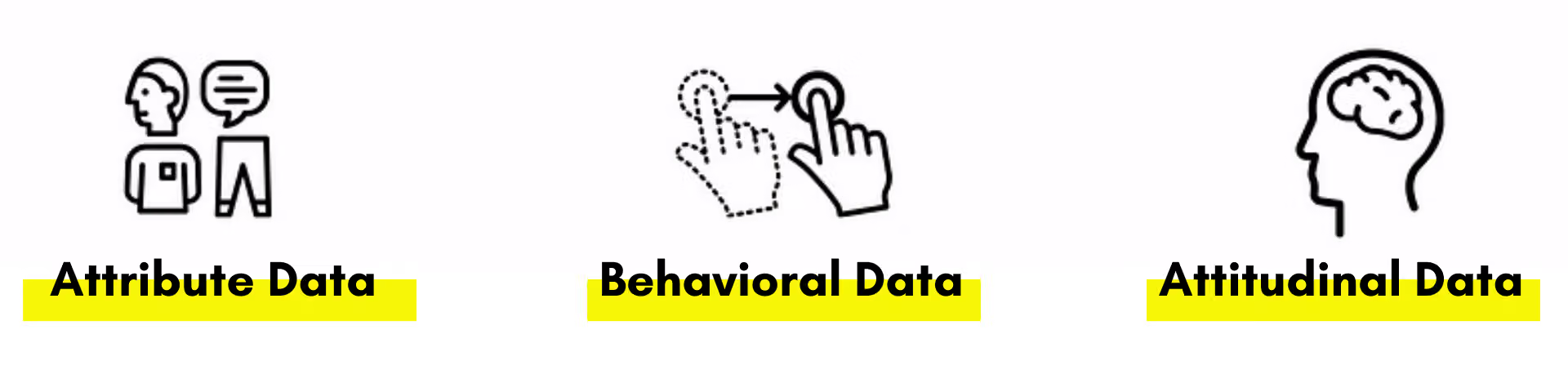
Basically, the questions can be divided into three types of data which are “Attribute”, “Behavioral”, and “Attitudinal”.
Attribute data: Data that defines specific characteristics of a population, such as ‘age,’ ‘gender,’ ‘marital status,’ ‘zodiac sign,’ ‘education level,’ ‘income level,’ and so on. This type of data typically has strong stability characteristics and is less likely to change over time.
Behavioral data: The recorded behaviors of specific populations, such as ‘shopping behavior,’ ‘social behavior,’ ‘eating behavior,’ ‘exercise frequency,’ ‘sleep patterns,’ ‘gaming frequency,’ and so on. The purpose of this type of data is to help us understand the behavioral characteristics of specific attribute populations more concretely.
Attitudinal data: The attitudes and values that specific populations exhibit towards specific phenomena or brands, used to explain the reasons for the emergence of behavior. For example, ‘lifestyle,’ ‘values,’ ‘personality,’ and so on. It often contains more significant value, but it is also the most difficult type of data to investigate, so it is recommended to analyze it together with other survey methods.
Things to consider when asking questions
-
- Avoid asking questions with preconceived biases.
- Avoid asking overly technical questions.
- Avoid asking questions about two behaviors at once.
- Ensure options are independent and mutually exclusive.
- Avoid using negative or double-negative questions.
- Avoid asking questions about hypothetical or speculative futures.
Nothing beats hands-on experience! Try making your survey now!
After reading about the survey designing tutorial, are you also interested in putting your learning into practice?
Click here to sign up for FREE and you can immediately apply what you’ve learned to create a survey!